LIFESTYLE
Publié le
thursday, 22nd october 2026
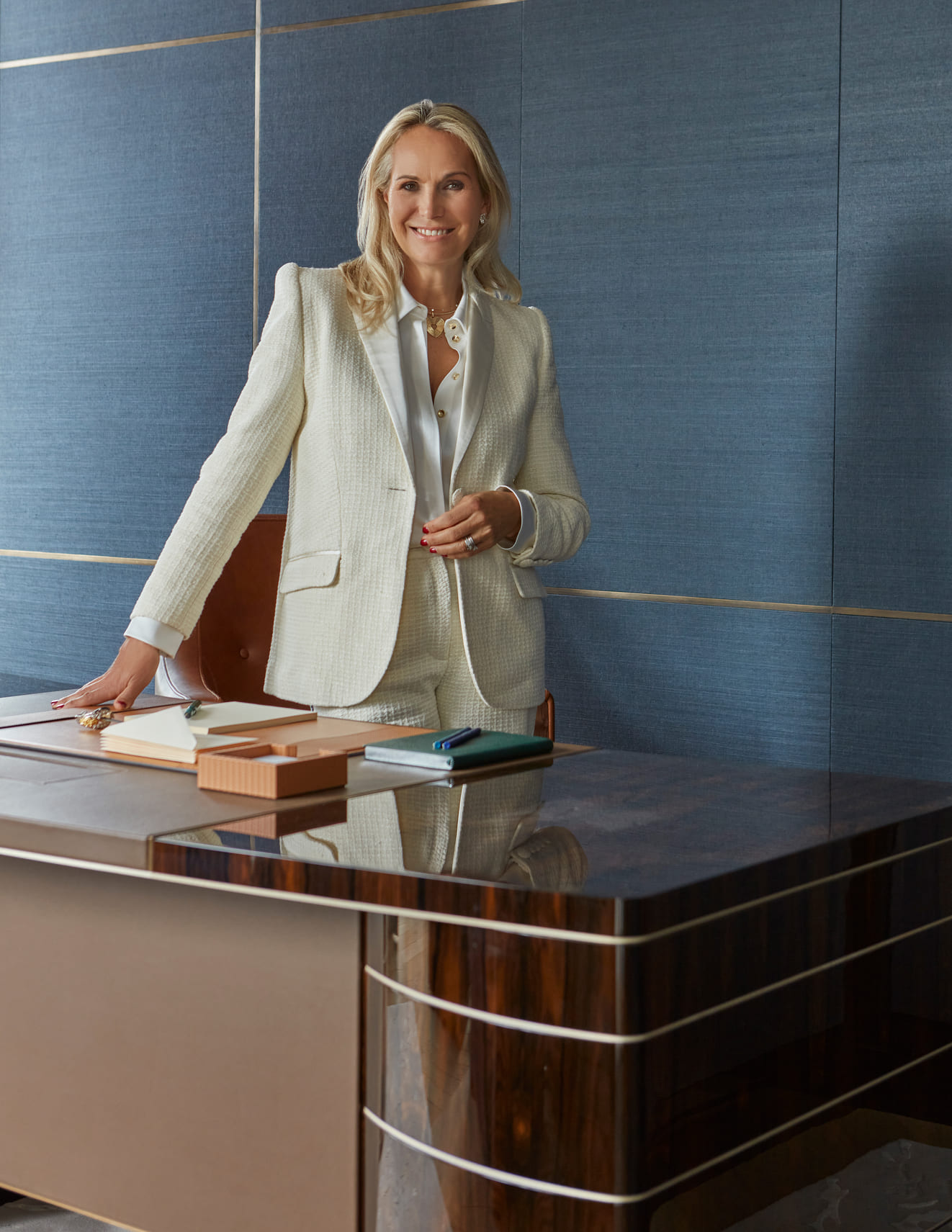
British interior designer Katharine Pooley has built her reputation on a conviction: there is no such thing as a signature style, only a sense of judgment. Drawing on sixteen years spent in Asia and visits to more than 150 countries, she designs everything from historic castles and country estates to yachts and private jets, rejecting passing trends in favour of singular interiors made to last. Recently recognised with the Butterfly Mark for her commitment to sustainability, she is taking on a growing number of collaborations this year, from Johnstons of Elgin to Pinetti, as well as the Bauhaus-inspired Marcel Collection for THG Paris. Between her love of Paris, her South Kensington boutique and her work with The Childhood Trust, she reflects on an approach in which beauty is only worthwhile if it serves everyday life.
You’ve lived and worked in Asia for 16 years and visited over 150 countries. How have these experiences shaped your design language today?
Adventure has always been fundamental to who I am. Travelling to remote places, climbing mountains and experiencing extraordinary landscapes have taught me to remain curious and to look beyond the familiar. My years living abroad were a first-hand education in how differently people inhabit a space. In Bahrain, I became fascinated by the relationship between architecture, light and gardens; in Hong Kong, I learnt how to create richness and individuality within the constraints of urban living. Across Asia, I developed a deep appreciation for the skill of artisans and the decorative traditions passed down through generations. Travel has taught me that beauty takes many forms. I love bringing together influences from different cultures, always with a genuine understanding and respect for their origins.
“For me, good design is about judgement: understanding what a place needs, what it can accommodate and what will give it a distinctive character.”
Your portfolio spans country estates, castles, private jets and yachts. What stays constant in your approach, whatever the scale or the setting?
I have never believed in a signature style defined by a particular colour or piece of furniture. For me, good design is about judgement: understanding what a place needs, what it can accommodate and what will give it a distinctive character. A historic château, a contemporary residence and a yacht each require an entirely different approach. The architecture, setting and way of life must always guide the design. On a yacht, for example, the experience is more intimate, and every detail must work within a space that is constantly moving. What remains constant is my desire to create interiors that feel individual rather than generic, with a quality and character that endure beyond passing fashions. Of course, it is always a pleasure when clients come to us drawn to a particular aspect of our work.

Forter Castle in Scotland and the Château near Cannes are both historic buildings. How do you balance respect for heritage with contemporary living?
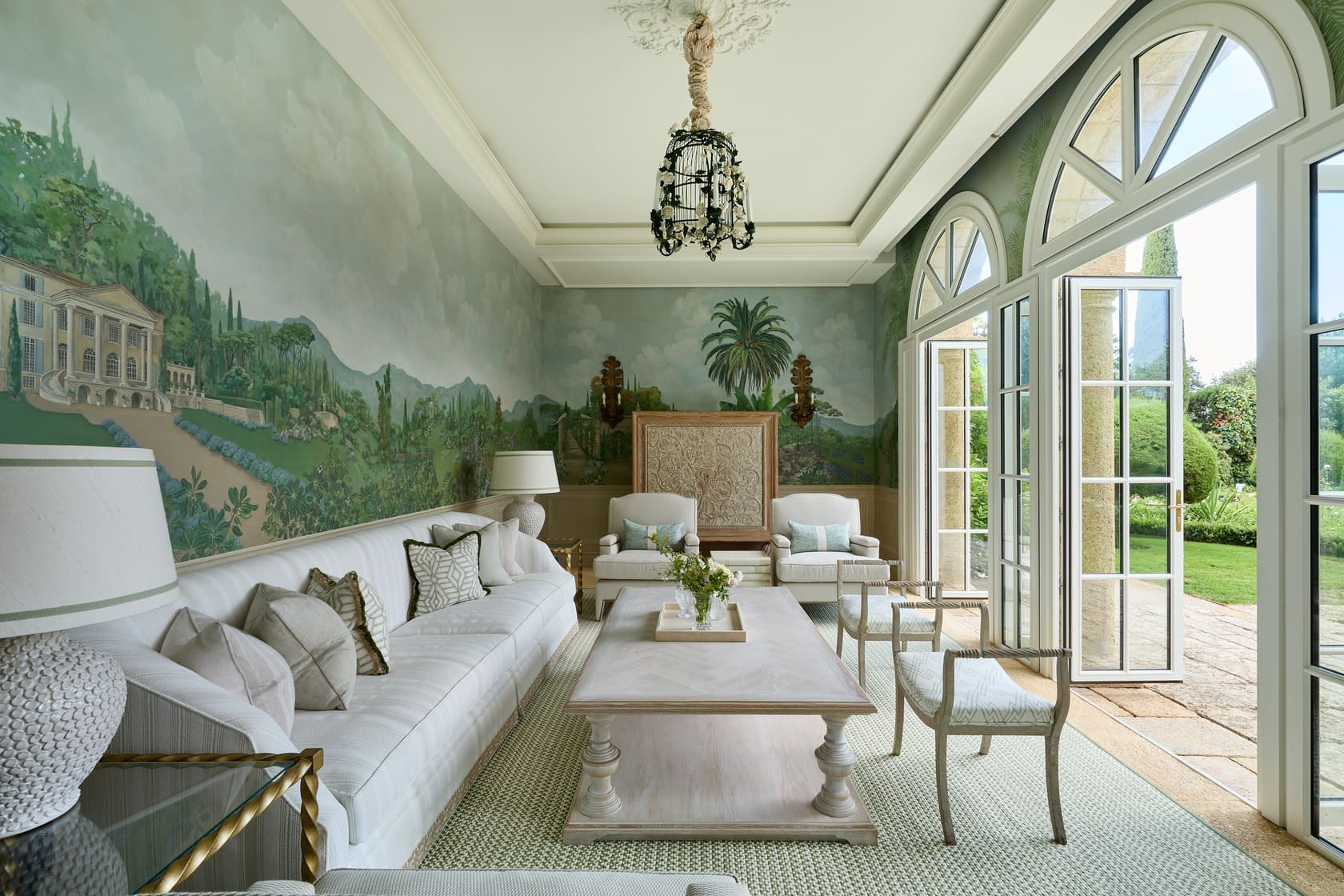
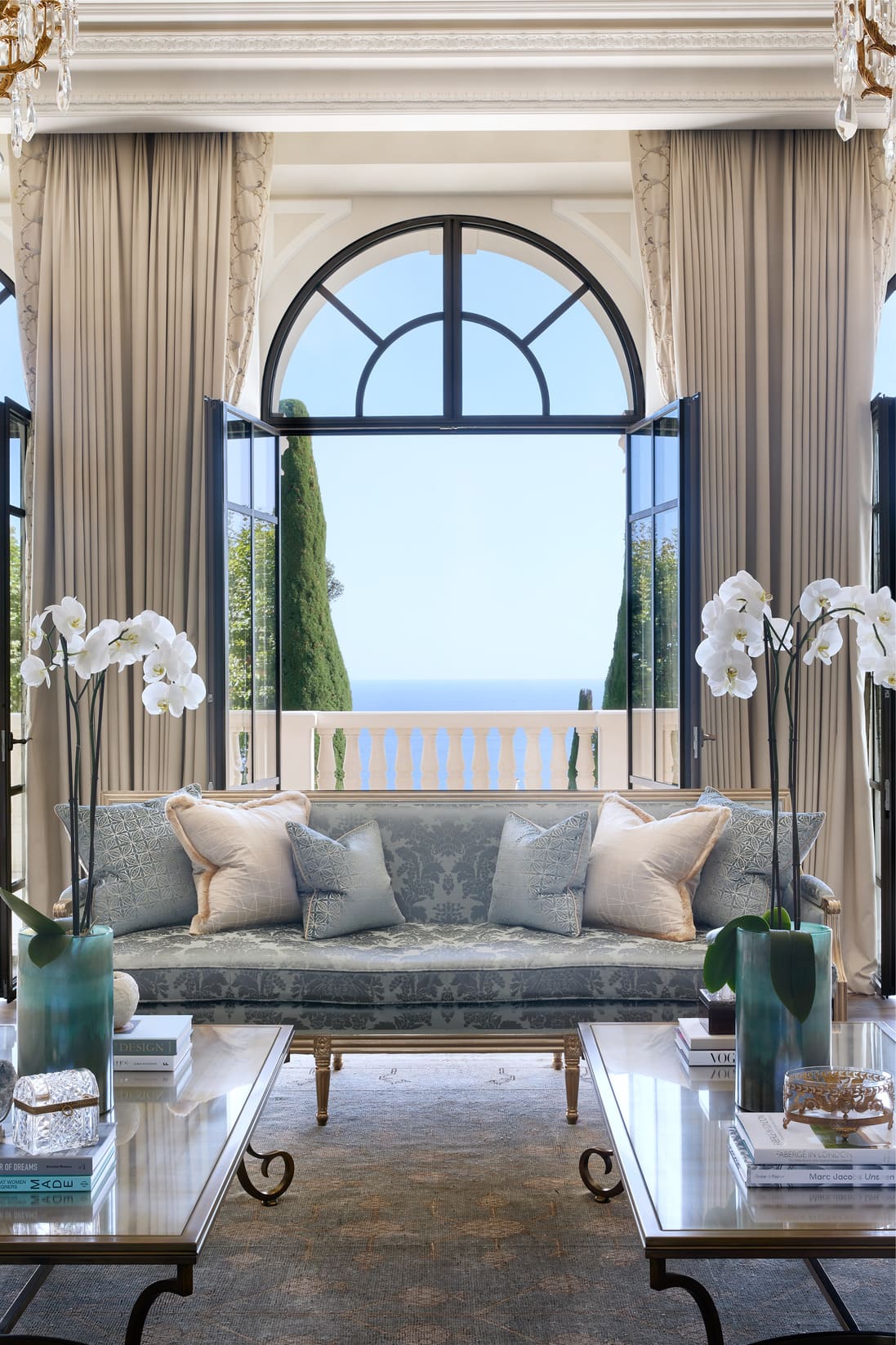
The key is to respect the history and architecture of a building while ensuring it feels entirely comfortable for modern life. I want the interiors to feel connected to their surroundings, whether that means drawing inspiration from the landscape, the original architecture or the character of the gardens. I particularly enjoy creating a dialogue between old and new: pairing an antique desk, a beautifully aged mirror or a traditional side table with contemporary wall treatments, lighting or rugs. The aim is never to recreate the past, but to allow the building’s history to sit naturally alongside the way we live today.
“Paris has an extraordinary instinct for combining elegance with ease, and I love exploring its markets, galleries and antique shops in search of pieces with character.”
You designed an apartment in Paris. What does the French art de vivre bring to your work, and what makes designing in Paris unique?
For me, the French art de vivre is about surrounding yourself with beautiful, individual objects and taking pleasure in them every day. Paris has an extraordinary instinct for combining elegance with ease, and I love exploring its markets, galleries and antique shops in search of pieces with character. There is a certain je ne sais quoi about the city that is difficult to define, from its architecture and restaurants to its exhibitions and theatre. Designing there is always a pleasure because the city itself offers such a rich source of inspiration. I also love that Paris is so close to London; I always travel by train, which makes returning to the city feel wonderfully effortless.
You’re known for your masterful precision and meticulous attention to detail. Can you share a detail, invisible to most, that you would never compromise on?
Functional beauty is something I will never compromise on. An interior must be beautiful, but it must also work exceptionally well for the people who live in it. This is often determined by details that go unnoticed: the positioning of a light, the proportions of a piece of furniture, the way a door opens or the feel of a handle in the hand. These decisions may seem small, but together they determine how a space feels and functions every day. I believe luxury lies as much in this thoughtfulness as it does in the materials or furnishings themselves. Nothing should be there simply for appearance; every element must earn its place.

You were recently awarded the Butterfly Mark. What does this recognition mean to you, and how does sustainability translate concretely into your projects?
Receiving the Butterfly Mark was a very special moment, and I see it as the beginning of an ongoing commitment rather than a final achievement. Positive Luxury continually assesses the standards businesses meet, encouraging us to examine our practices and find ways to improve. Within our projects, this means looking carefully at our supply chains, choosing suppliers and craftspeople thoughtfully, and sourcing locally wherever possible. We also love incorporating antiques when they are right for a scheme, giving existing pieces a new life. Where items are removed during a refurbishment, we look at opportunities to recycle or donate them rather than simply discard them.
“I also believe it is important to use whatever experience, time and influence we have to support causes that make a tangible difference to people’s lives.”
You’re an ambassador for The Childhood Trust and a trustee of King’s Medical College, Campaign for Wool and the British Forces Foundation. Why are these causes so close to your heart?
Each of these organisations supports something I feel strongly about. The Childhood Trust is particularly close to my heart as an interior designer. The spaces in which children grow up can have a profound effect on their sense of security, confidence and wellbeing. To help create an environment where a child feels safe and has the opportunity to thrive is an enormous privilege. I also believe it is important to use whatever experience, time and influence we have to support causes that make a tangible difference to people’s lives.

Your homeware boutique in South Kensington presents accessories and art collected from around the world. How do you choose the pieces, and how does the boutique feed your interior design work?
I opened my Walston Street boutique 22 years ago, initially as a collection of art, sculpture, objets and beautiful pieces discovered during my travels. I have always been drawn to objects with a particular quality, whether that is their craftsmanship, their history or simply the way they make me feel. I select pieces that interest me personally and that I can imagine bringing something special to an interior. The boutique was the starting point for my early design projects, and today our home dressing team is based there. I
"I sidestep trends. I've never wanted to design an interior simply because something is in fashion at the moment."
This year you launched collections with Johnstons of Elgin, Pinetti and THG Paris. What do you look for in a partner brand, and how do you adapt your signature to their craftsmanship?
Many of our collaborations grow from longstanding relationships with brands whose products we specify regularly in our projects. When you have worked closely with a maker and understand the quality of their materials and craftsmanship, developing something together feels like a natural progression. I look for partners who share a commitment to quality, have a strong understanding of their materials and bring genuine expertise to what they do. From there, the process is about identifying what we can create together that feels fresh and distinctive. My role is to bring a particular design perspective while respecting the skills and traditions of the maker, resulting in pieces that feel considered, useful and enduring.
With THG Paris, you reinterpreted the Bauhaus legacy through the Marcel Collection, and THG introduced wood into its creations for the first time. How did this collaboration come about, and what was the creative challenge?
I have worked with THG Paris for many years, so the collaboration developed from a longstanding understanding of the brand and its exceptional craftsmanship. I wanted to create a collection that was genuinely different from anything THG had produced before, while remaining true to its expertise. The Marcel Collection takes inspiration from the Bauhaus principle of bringing form and function together, with clean lines and carefully considered proportions. Introducing wood as well as materials such as stone presented an exciting challenge, particularly in a collection traditionally associated with more conventional bathroom materials. The contrast creates warmth and a different tactile quality.
What do you dodge in your work: trends, shortcuts, compromises, or something else?
Trends. I have never been interested in designing an interior simply because something is fashionable at the moment. My approach has always been to create spaces that will feel just as beautiful and relevant many years from now as they do today.
Plus d'articles